
CASE STUDY
Industrial ventilation system upgrade: 20% airflow increase at an Auckland wastewater treatment plant
When an infrastructure construction company needed a reliable, corrosion-resistant industrial ventilation system for a hazardous area at an Auckland wastewater treatment plant, they turned to DUSTEX – and the result was a purpose-engineered upgrade that increased ventilation performance by 20%.
DUSTEX is an Auckland-based industrial dust extraction and engineering specialist, designing, supplying, and commissioning NZ-made systems for clients across New Zealand since 2009.
Background
An Auckland wastewater treatment plant, operated by Watercare, is one of New Zealand's largest wastewater treatment facilities, serving the Auckland region and processing hundreds of millions of litres of wastewater daily. The plant is a complex industrial environment, with multiple buildings and systems operating continuously to treat wastewater before it's safely returned to the environment.
The Powerhouse Basement within the plant houses critical infrastructure. Like many areas in a wastewater treatment facility, it presents a challenging operating environment: chemical exposure from water treatment processes creates corrosive conditions that take a significant toll on mechanical equipment over time.
An infrastructure construction company engaged DUSTEX to carry out an industrial ventilation system upgrade in the Powerhouse Basement – replacing ageing, corroded equipment with a purpose-engineered solution suited to the demands of the environment.
The problem
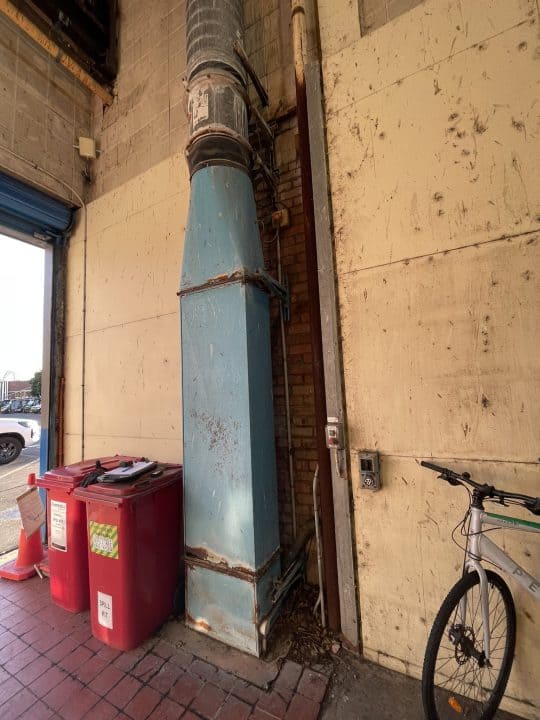
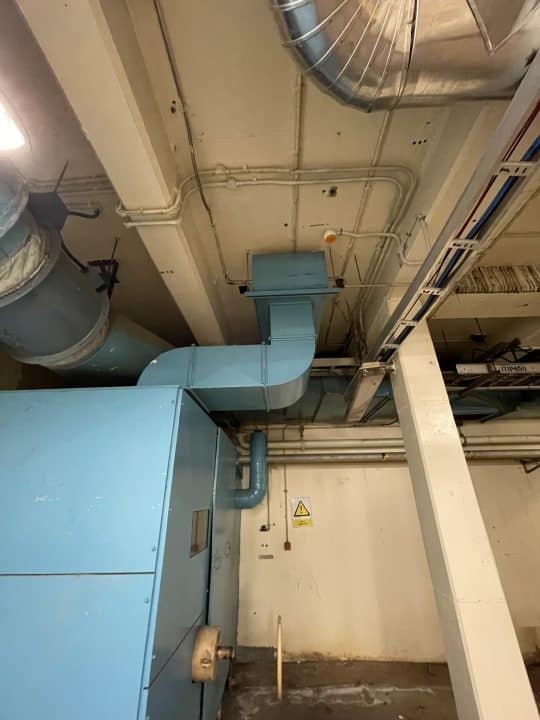
The existing industrial ventilation system in the Powerhouse Basement had deteriorated significantly over years of operation in a chemically aggressive environment. Exposure to water treatment chemicals had caused severe corrosion to both the axial inline fan and the associated carbon steel ductwork, compromising the reliability and performance of the system.
The building environment contains fugitive gases from the chemical processes used in water treatment, which are potentially explosive. Any replacement ventilation equipment therefore needed to meet Exde explosion protection criteria, ensuring it could not become an ignition source.
The combination of corrosion resistance and explosion protection requirements meant a straightforward like-for-like replacement was not sufficient. The new system needed to be purpose-engineered for the environment and installed within an operating facility with minimal disruption.
The solution
DUSTEX provided a complete industrial ventilation system upgrade package, managing the project from engineering review through to installation and commissioning in close coordination with the site's electrical and control contractors.
Engineering review and fan selection
DUSTEX carried out a full engineering review to determine the correct fan specification for the application, considering the required airflow, duct configuration, operating environment, and the Exde protection requirement.
New Exde-rated supply air fan
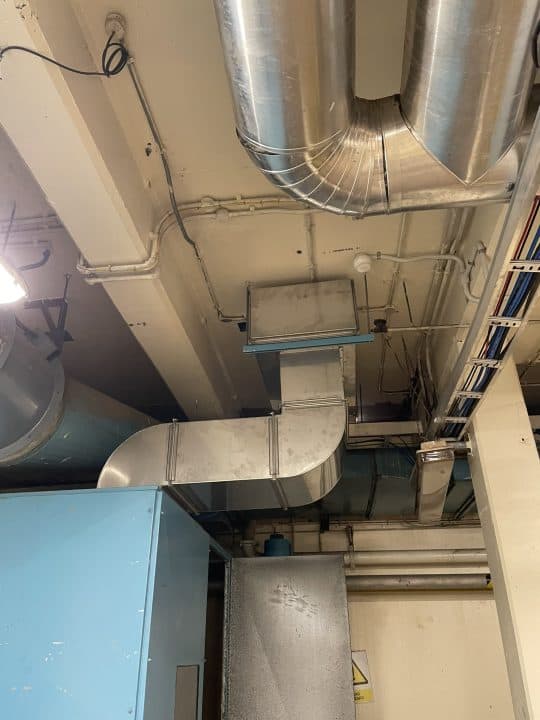
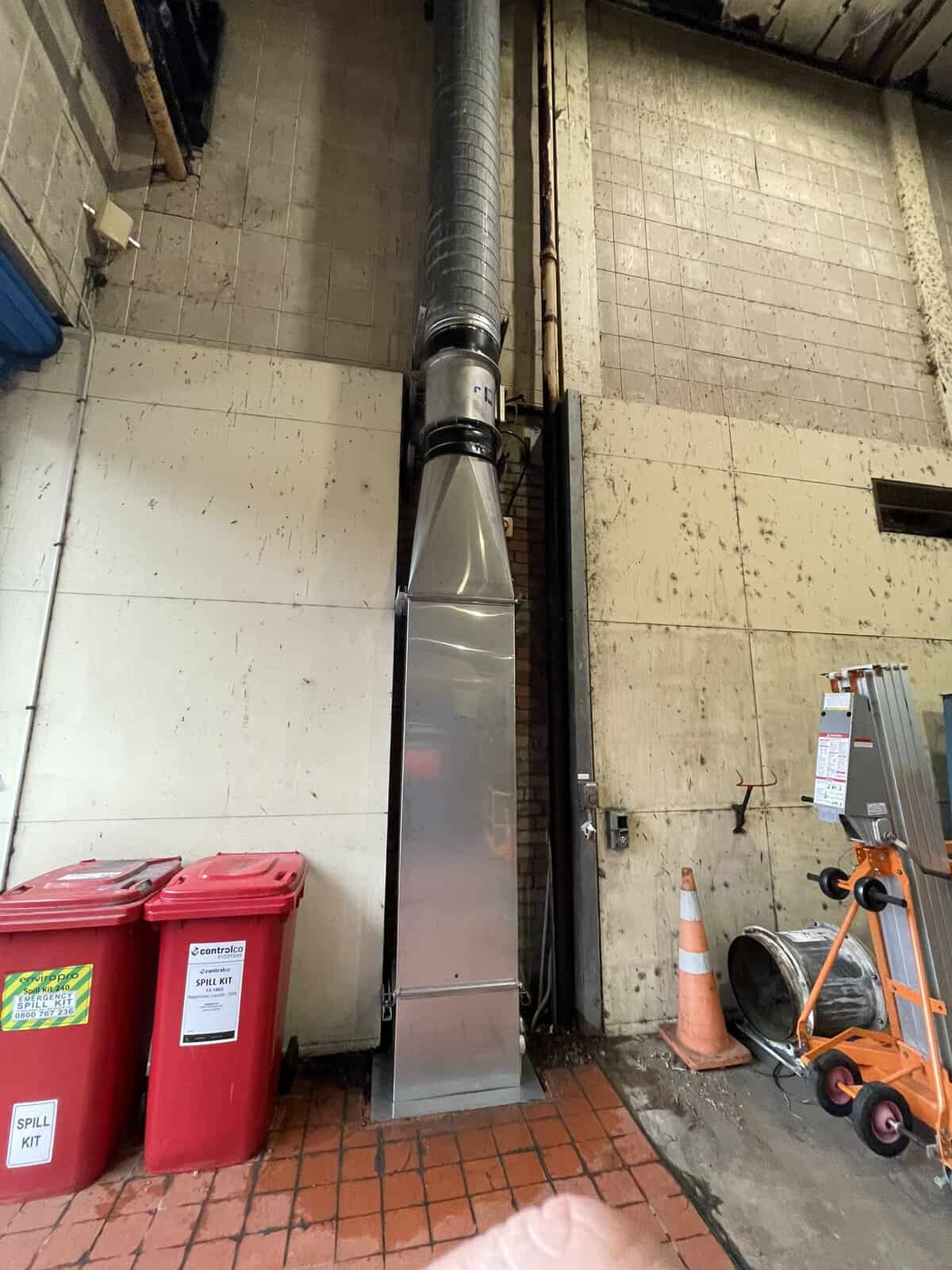
A new supply air fan was designed and supplied in 316 stainless steel, incorporating an Exde-rated motor and anti-static blades. The stainless steel construction provides the corrosion resistance needed for long-term reliable operation in a chemically aggressive atmosphere.
New 316 stainless steel ductwork
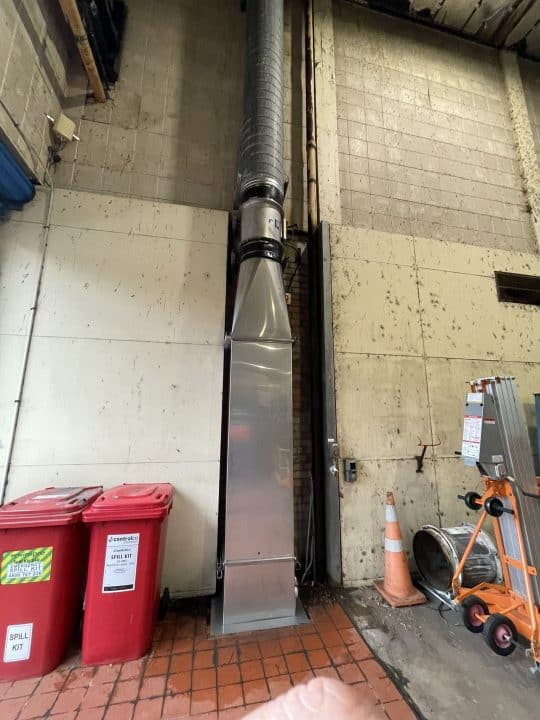
The corroded carbon steel ductwork was replaced with new 316 stainless steel ducting, manufactured using folded and lock-formed sheet construction with Mezz flanges. The whole system is now suited to the operating environment.
Installation and site coordination
DUSTEX managed the mechanical works, including removal of existing equipment, installation of the new system, temporary access works, and coordination with the electrical and control contractors. Following installation, DUSTEX commissioned the completed industrial ventilation system and verified that airflow performance met the project requirements.
The results
The completed industrial ventilation system upgrade increased airflow through the Powerhouse Basement system from 1 m³/s to 1.2 m³/s: a 20% increase that met the project's ventilation target for the biogas valve enclosure.
The 316 stainless steel fan and ductwork are significantly better suited to long-term operation in a chemically aggressive atmosphere than the carbon steel they replaced, while the Exde-rated motor eliminates the ignition risk a standard motor would present in an area with potentially explosive fugitive gases.
The project demonstrates DUSTEX's capability to deliver a complete ventilation upgrade within an operating facility, managing mechanical installation, temporary access works, and contractor coordination without disrupting ongoing operations.
Frequently asked questions
What is an industrial ventilation system?
An industrial ventilation system controls air quality and atmosphere within a building or enclosed space by moving air through a ducted network. It can remove heat, control humidity, dilute or extract hazardous gases and fumes, and maintain safe working conditions.
What is Exde explosion protection, and when is it required?
Exde is a standard for electrical equipment installed in potentially explosive atmospheres where flammable gases, vapours, or dusts may be present. It is used to prevent equipment becoming an ignition source.
Why is 316 stainless steel used in corrosive industrial environments?
316 stainless steel offers greater resistance to chemicals, chlorides, and industrial process environments than standard 304 stainless steel or carbon steel. It is well suited to wastewater treatment plants, where chemical exposure and moisture are constant.
Can an industrial ventilation system be upgraded within an operating facility?
Yes. It requires careful installation planning, coordination between mechanical and electrical contractors, and appropriate temporary access solutions. DUSTEX has experience delivering upgrades within live operating facilities while minimising disruption.
What causes industrial ventilation systems to corrode in wastewater treatment environments?
Wastewater treatment plants use a range of chemicals in the treatment process, and the fugitive gases and moisture present in plant buildings create a persistently aggressive atmosphere for mechanical equipment. Carbon steel - widely used in older ductwork and fan housings - corrodes relatively quickly in these conditions. Over time, corrosion compromises both the structural integrity and the performance of the system. Specifying corrosion-resistant materials such as 316 stainless steel from the outset significantly extends service life and reduces maintenance requirements.
In the Media
The DUSTEX engineer
Perry Mundell
Director & Senior Design Engineer
BBA (UNISA) | DipPM (Damelin) | DipChem (Intec College)
Perry has been working in dust extraction and air pollution control since 1997, and managing engineering and capital projects since 1995 - experience that spans both the technical and commercial sides of complex industrial projects.
His career began at Mikropul, where he spent almost seven years managing turnkey engineering projects, before moving into project engineering roles at McAlpine Hussmann and Filtercorp covering ventilation, air conditioning, and dust extraction and air pollution control systems. He progressed to Engineering Manager at Filtercorp before joining DUSTEX as co-director in 2015. His experience with larger engineering firms gives him the capability to manage both large industrial projects and smaller, specialised ventilation systems.
At DUSTEX, Perry co-leads the business alongside Ken Skinner, with hands-on involvement across system design, industrial fan selection, project management, and commissioning.
Perry led this industrial ventilation system upgrade at an Auckland wastewater treatment plant, bringing his expertise in fan selection, hazardous area engineering, and project coordination to a technically demanding project in a challenging operating environment. His goal was a solution that's practical, reliable, and built to last.
Learn more about DUSTEX and meet the rest of the team.