
CASE STUDY
A cleaner, safer, more efficient operation: DUSTEX and Stormwater360’s turnkey dust extraction solution
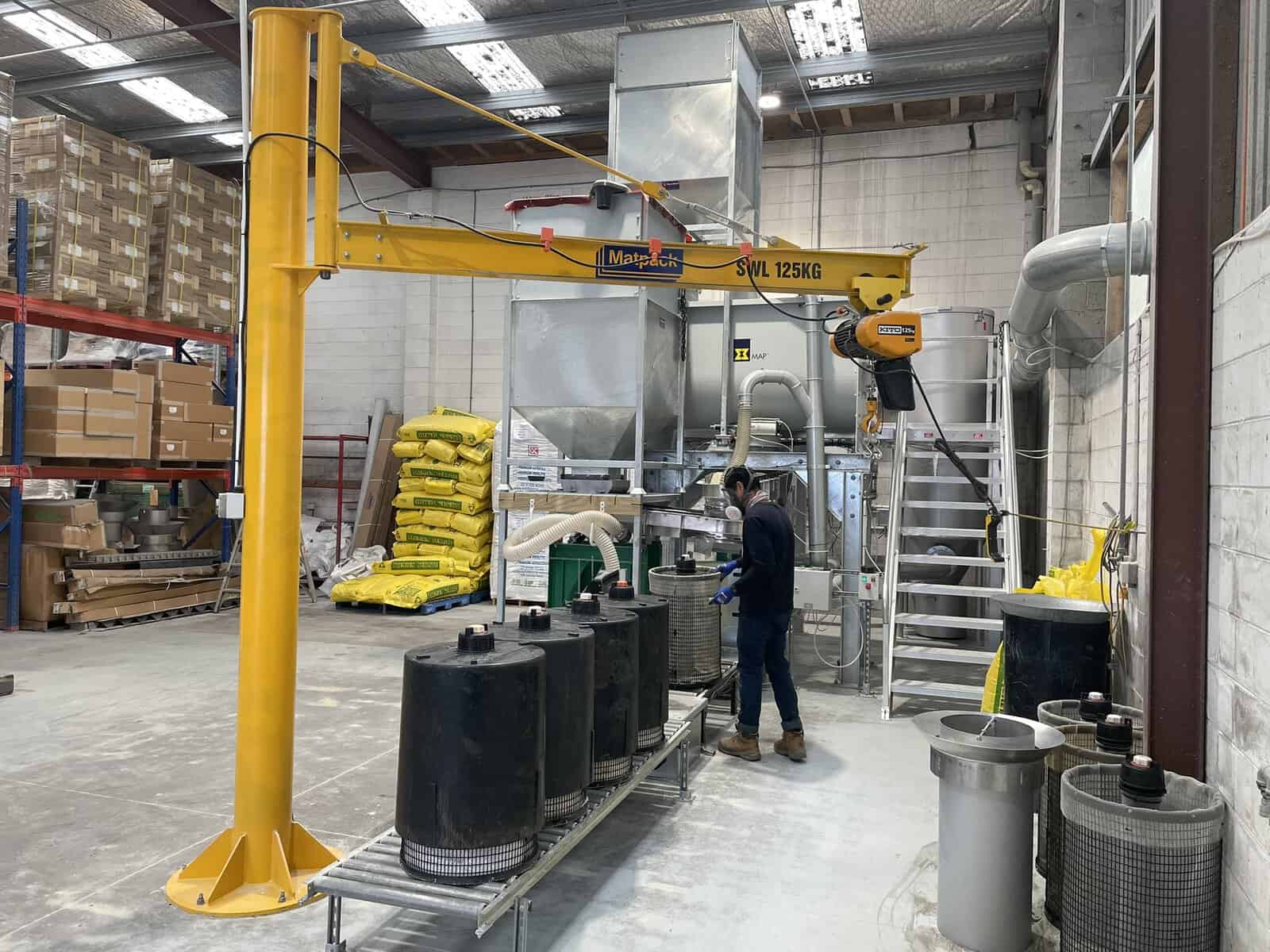
What began as a discussion about air quality developed into a collaborative turnkey dust extraction project between DUSTEX and Stormwater360. Together, the teams created a fully integrated cartridge loading plant that has significantly reduced manual handling and airborne dust while improving production efficiency, consistency, and operator experience.
DUSTEX is an Auckland-based industrial dust extraction and engineering specialist, designing, supplying, and commissioning NZ-made systems for clients across New Zealand since 2009.
Background
Stormwater360 provides engineered stormwater treatment solutions that remove contaminants from runoff before they enter waterways. One of these solutions is the StormFilter™, which uses cylindrical filtration cartridges filled with specially selected media to capture and remove pollutants from stormwater. Each cartridge contains a precise combination of materials, including carbon, perlite, and zeolite, loaded into a two-section inner and outer chamber.
The cartridges are a technically demanding product, and the process of filling them with the right media in the right configuration - consistently and at volume - is central to Stormwater360’s operation.
DUSTEX’s relationship with Stormwater360 began in 2017, when Ken Skinner first visited the site to discuss dust extraction for a proposed cartridge loading plant. At the time, Stormwater360 was weighing up options, and while no project went ahead immediately, the conversation planted the seed.
The problem
When DUSTEX first visited in 2017, the cartridge loading process was entirely manual - and like many manufacturing operations of this type, it generated significant dust.
Operators were filling cartridges by hand, pouring bags of carbon, perlite, and zeolite directly into each unit. The media was blended in a concrete mixer in small batches, and a tent was erected within the factory to contain dust generated by the process. The tent was an effective interim control measure, and operators wore appropriate respiratory and eye protection throughout. The work was physically demanding.
As production volumes increased, the manual process became an operational bottleneck. It typically required three people to run the loading operation, while the concrete mixer limited batch size and consistency. Stormwater360 identified an opportunity to redesign the process to support future production volumes, improve product consistency and create a safer, more efficient working environment for its manufacturing team.
Why a turnkey dust extraction solution?
When Stormwater360 returned to DUSTEX in 2025, their brief had grown substantially - from a standalone dust collector to a full turnkey dust extraction solution. Working closely together, DUSTEX and Stormwater360 defined the scope: a purpose-built cartridge loading plant that would automate the process from end to end, within a defined budget.
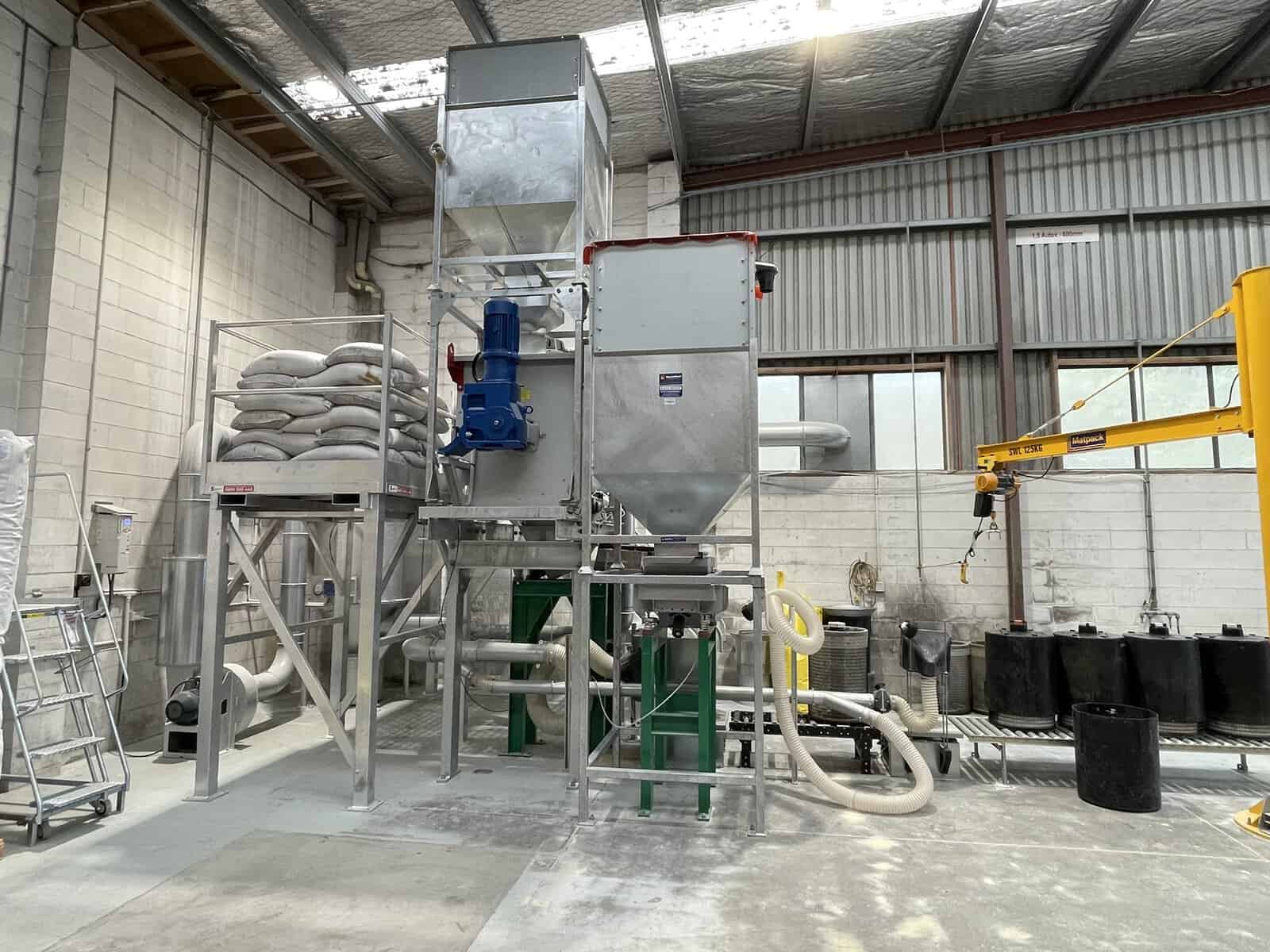
Working in close collaboration with the Stormwater360 team, DUSTEX designed the entire integrated system - from bulk media handling through to cartridge filling, compaction, and conveying - with dust extraction built in at every stage where it was needed. Rather than bolting dust control onto a pre-existing process, it was designed into the system from the outset.
This approach meant that most manual and dust-generating touchpoints in the previous system could be removed rather than simply managed.
The solution
DUSTEX designed, supplied, and commissioned the complete turnkey dust extraction system and cartridge loading plant, delivered in February 2026. The system replaced virtually every step of the manual process:
Bulk media handling
The concrete mixer and bag-pouring operation was replaced with large hoppers fed by bulk bags. A forklift positions the bulk bag above the hopper, the bag is opened at the base, and the media flows in – substantially reducing manual lifting, small batch handling, and mess.
Blending
A dedicated industrial blender replaced the concrete mixer. Carbon and perlite are blended to the required ratio in consistent, full-scale batches.
Automated filling
Vibrating feeders draw the blended media from the hoppers and feed it into the cartridge chambers in the correct configuration. The cartridge has two sections - an inner core and an outer layer - and the system delivers the right material to each section automatically.
Compaction and conveying
A vibrating table compacts the media as it loads, ensuring consistent fill density. Once filled, cartridges move along a conveyor to the next stage of production.
Dust extraction - integrated throughout
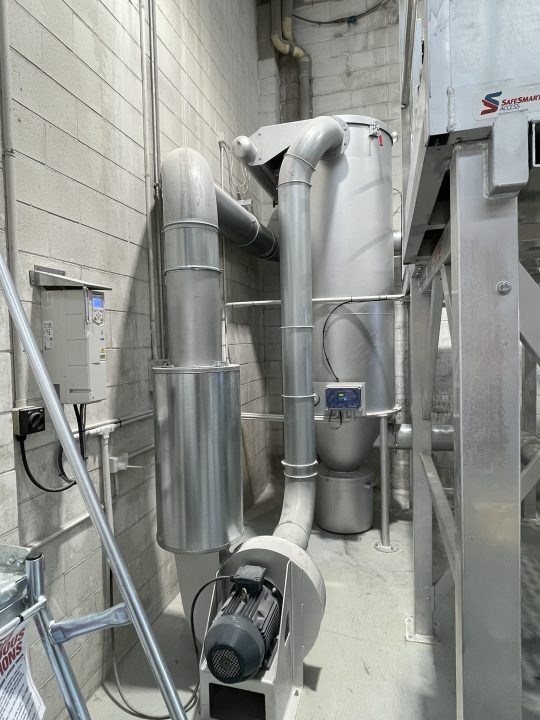
Dust extraction is built into the system at the points where it’s generated: the blender, the vibrating feeders, and the filling stations. Airborne particles are captured at source and extracted away, creating a significantly cleaner working environment without the need for a containment tent.
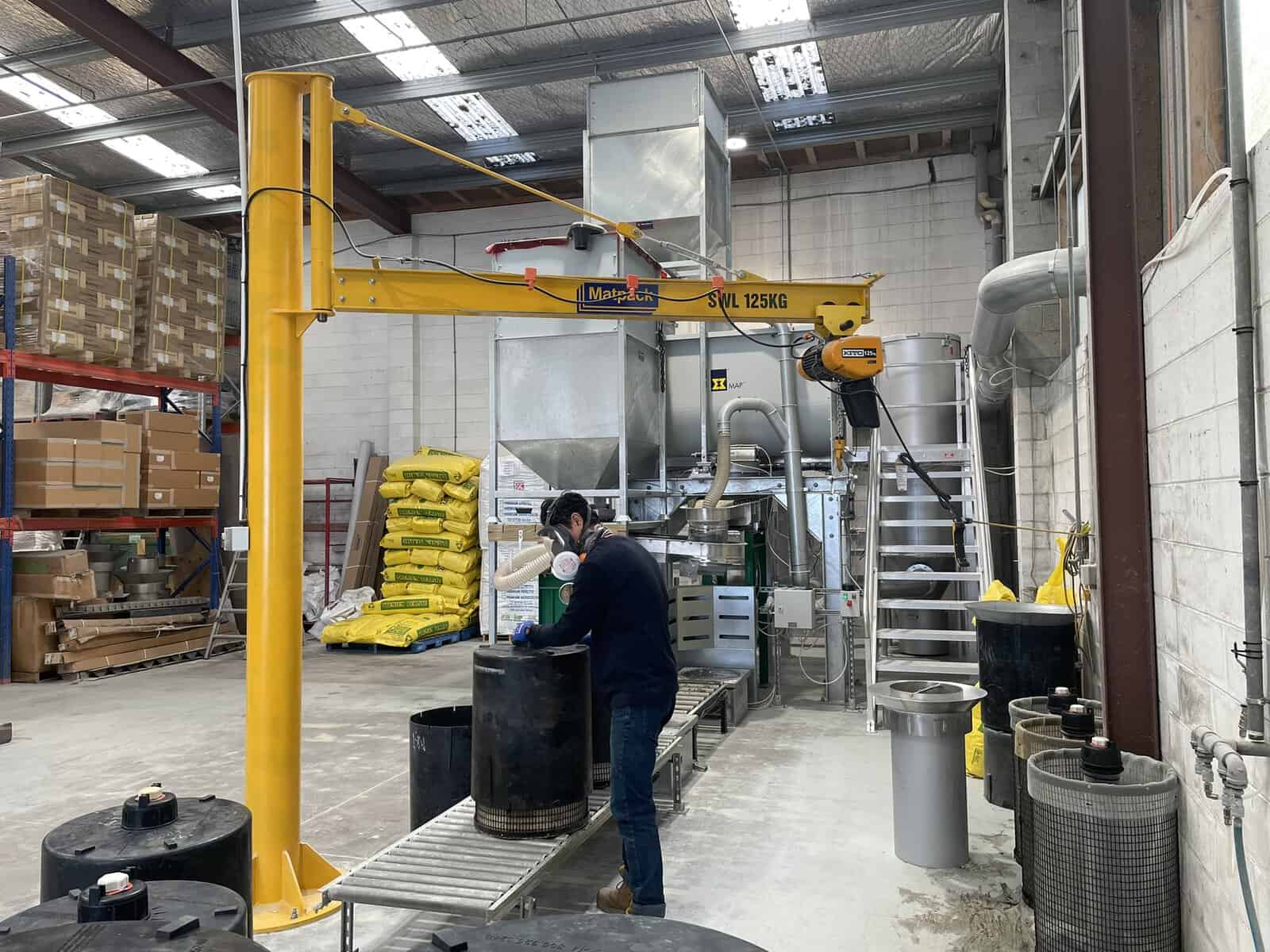
An overhead crane was also included in the plant design, giving operators the ability to lift and position cartridges and bulk bags safely and efficiently.
Taken together, these components removed most manual and dust-generating touchpoints from the previous process and replaced them with a system that one operator can run cleanly and efficiently.
The results
The before-and-after contrast at Stormwater360 is striking.
What once required three operators working inside a dust containment tent - manually pouring bags, running a concrete mixer, and wearing respiratory and eye protection - is now a clean, efficient, single-operator plant. One person can run the entire cartridge loading process, without a dust tent, with substantially less manual lifting, and significantly reduced exposure to airborne media.
The turnkey dust extraction plant has drawn strong praise from both the Stormwater360 management team and the operators who use it every day. For the people who work on the floor, the improvement is immediate and tangible: the work is less physically demanding, the environment is cleaner and more comfortable, and the process runs faster and more consistently than before.
DUSTEX's relationship with Stormwater360 spans more than eight years - from an initial site visit in 2017 to the delivery and commissioning of the completed plant in February 2026. It's a good example of how a long-term client relationship, genuine collaboration at every stage of the project, and a shared commitment to getting it right can produce an outcome that can delivery a strong outcome for productivity, product consistency, and operator experience.
What does the client say?
"We engaged with Dustex initially for a dust extraction solution forming part of a filling line we were looking to develop. We soon realised Dustex had the skills and expertise we required for a complete turnkey solution far exceeding the initial blueprint.
"Dustex took a collaborative approach, worked closely with our operations and engineering teams creating initial drawings which were refined, developed, and produced. The project was managed with full installation, no hassle and very little down time.
"The outcome is a filling line we are proud of. A safer and more pleasant working environment, for both dust limitation , reduced manual lifting and superior product flow. It has also improved our filing quality while adding capacity.
"I have no hesitation in recommending the Dustex team.”
- Miles Henderson, Global Operations Manager - Stormwater360
Frequently asked questions
What is a turnkey dust extraction system?
A turnkey dust extraction system is a complete, end-to-end solution designed, supplied, and commissioned by a single provider. Rather than sourcing components separately and integrating them yourself, the client receives a fully operational system - designed for their specific process, installed, and ready to run. It typically includes dust collection, ducting, filtration, and any ancillary equipment the process requires.
How do you reduce dust in a manufacturing plant?
The most effective approach is to capture dust at the point where it's generated, before it becomes airborne. This means designing extraction hoods and ducting into the process itself - not adding them as an afterthought. A centralised dust extraction system connected to dust-generating stations, with filtration selected for the application, can provide more effective control than portable units or containment measures like dust tents.
What is cartridge loading and why does it create dust?
Cartridge loading is the process of filling filtration cartridges with granular or powdered filter media - such as carbon, perlite, or zeolite. The media is fine and light, and any pouring, blending, or vibration sends particles airborne immediately. Integrating extraction into the filling process helps capture dust at source and reduce reliance on respiratory protection and containment structures.
The DUSTEX engineer
Christiaan Labuschagne
Lead Engineer
Bachelor of Engineering (B.Eng), Mechanical Engineering, University of Pretoria
Christiaan joined DUSTEX in 2019 and has since led the design and delivery of dust extraction, ventilation, and industrial fan projects for clients across New Zealand. His role spans the full project lifecycle - from scoping and design through to supply, commissioning, and customer handover - and includes leading DUSTEX's in-house engineering team and managing the manufacture of all equipment built in New Zealand.
Before DUSTEX, Christiaan worked as a design engineer at International Marathon United Technology Group, where he designed and built MRAP (mine-resistant, ambush-protected) vehicle prototypes - precision engineering work with zero margin for error. He also founded MatrForge, a South African engineering firm specialising in 3D printing and rapid prototyping for corporate clients. That combination of high-stakes structural design and advanced manufacturing experience underpins the way he approaches complex, multi-component projects like the Stormwater360 cartridge loading plant.